
What a misunderstood topic this is. Jesus defines the unpardonable sin as blasphemy against the Holy Spirit. And many Christians have legitimate questions and concerns about this subject. It is not surprising that this revelation has been sorely misunderstood. If something is unforgivable and Christians knew exactly what it was, they would avoid it like the plague. The devil has done everything he can to keep the Church from understanding this, and our lack of understanding has given him a foothold for deceiving us.
Any time we see a topic in the Bible that theologians and respected Bible scholars disagree on, that should concern us, especially when there can only be one answer.
We cannot treat this warning lightly. A mistaken understanding can either produce false assurance or burden a sincere believer with needless despair. For that reason, the teaching will distinguish carefully between ordinary failure followed by repentance and the settled, persistent rejection of the Holy Spirit described in Scripture.
The word of God is clear on this subject, but Satan has successfully built a stronghold in the minds of Christians for the last 500 years.
We find references to the unpardonable sin in Mark 3, Luke 12, and Matthew 12. We will be focusing primarily on Matthew’s account for this teaching. It is the most complete account. This will give us the proper context to interpret this passage.
What the unpardonable sin is not.
The most common teaching about the unpardonable sin is that a true Christian can’t commit the unpardonable sin. Another belief is that rejecting Jesus’ call to salvation is the only unforgivable sin. Yet another doctrine declares that only people alive when Jesus walked the Earth could commit this sin; therefore, it is not relevant for today. These are all wrong teachings.
You will see from Scripture that ONLY a born-again Christian can commit such a sin. I will clarify this in the following paragraphs.
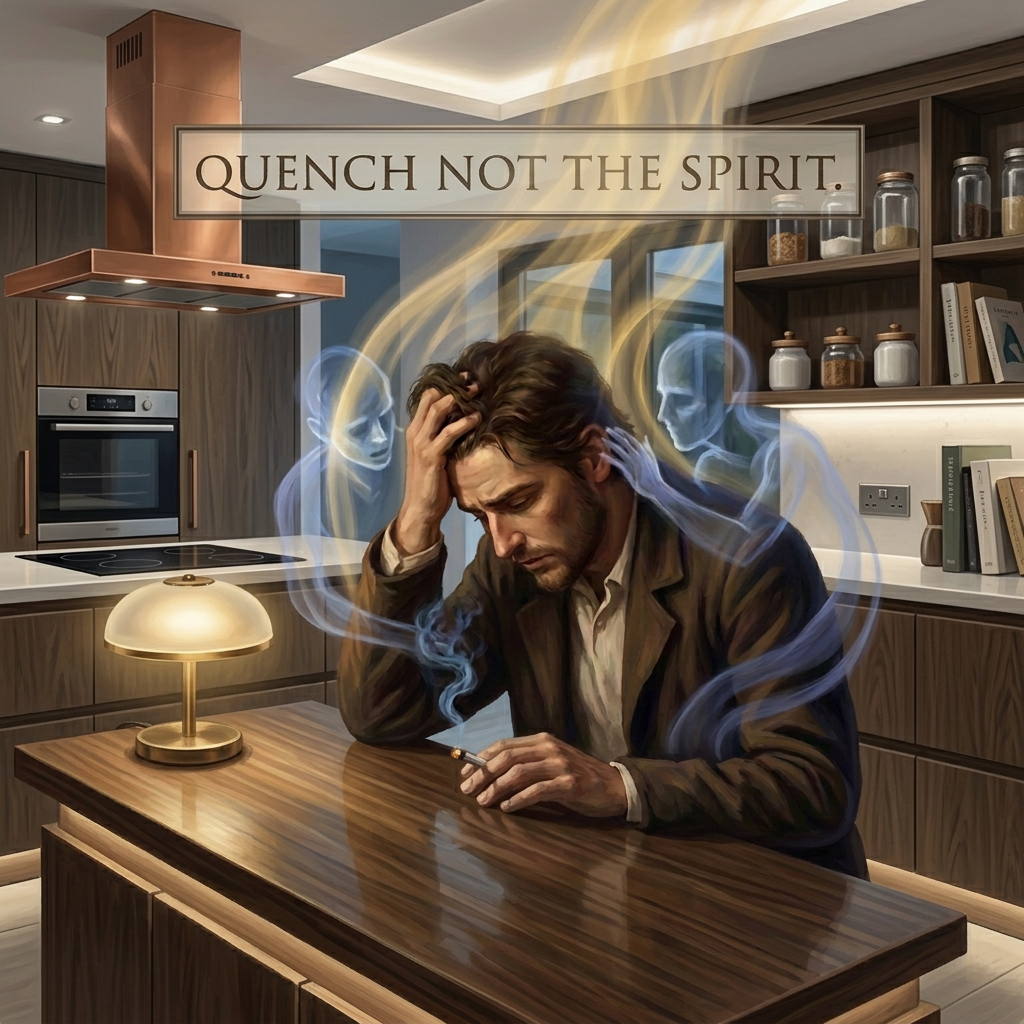
Blasphemy against the Holy Spirit is not an isolated failure or a moment of weakness. It is a settled and persistent rejection of the Spirit’s revealed work and rightful authority in a believer’s life. Continued resistance produces spiritual hardness, the absence of righteous fruit, and ultimately apostasy. Ultimately it is the rejection of God and the refusal of Jesus Christ as Lord. In a professing Christian’s life, this condition is evidenced not by an imperfect struggle toward obedience, but by prolonged resistance and rebellion that yields no fruit of repentance.
Because Christians interpret these passages differently, we will test this claim carefully against the immediate context of Jesus’ words and the broader witness of Scripture.
First, let’s look at the entire passage in Matthew that puts this whole thing in context.
Blasphemy Against the Holy Spirit
Matthew 12:22-37 Then was brought unto him one possessed with a devil, blind, and dumb: and he healed him, insomuch that the blind and dumb both spake and saw. 23 And all the people were amazed, and said, Is not this the son of David? 24 But when the Pharisees heard it, they said, This fellow doth not cast out devils, but by Beelzebub the prince of the devils. 25 But Jesus knew their thoughts, and said to them: “Every kingdom divided against itself is brought to desolation, and every city or house divided against itself will not stand. 26 If Satan casts out Satan, he is divided against himself. How then will his kingdom stand? 27 And if I cast out demons by Beelzebub, by whom do your sons cast them out? Therefore they shall be your judges. 28 But if I cast out demons by the Spirit of God, surely the kingdom of God has come upon you. 29 Or how can one enter a strong man’s house and plunder his goods, unless he first binds the strong man? And then he will plunder his house. 30 He who is not with Me is against Me, and he who does not gather with Me scatters abroad.
The Unpardonable Sin
31 “Therefore I say to you, every sin and blasphemy will be forgiven men, but the blasphemy against the Spirit will not be forgiven men. 32 Anyone who speaks a word against the Son of Man, it will be forgiven him; but whoever speaks against the Holy Spirit, it will not be forgiven him, either in this age or in the age to come.
A Tree Known by Its Fruit
33 “Either make the tree good and its fruit good, or else make the tree bad and its fruit bad; for a tree is known by its fruit. 34 Brood of vipers! How can you, being evil, speak good things? For out of the abundance of the heart the mouth speaks. 35 A good man out of the good treasure of his heart brings forth good things, and an evil man out of the evil treasure brings forth evil things. 36 But I say to you that for every idle word men may speak, they will give account of it in the day of judgment. 37 For by your words you will be justified, and by your words you will be condemned.”
The word blasphemy in this context means to show deep disrespect, contempt, or to speak against. So, with this definition in mind, according to Jesus, a person can show deep disrespect, contempt, and speak against Himself, but if done to the Holy Spirit, it is not forgivable in this life or the life to come. What is the difference? Aren’t they the same? Why is the Holy Spirit singled out as different? How can you blaspheme Jesus and God the Father and be forgiven, and yet not be forgiven if you blaspheme the Holy Spirit?
To understand the unpardonable sin, you must know why the Holy Spirit is singled out as different. We find our answer in Hebrews.
Why Blasphemy Against the Holy Spirit is Judged and Not blasphemy of the Father or the Son.
Hebrews 10:26-31 For if we sin willfully after we have received the knowledge of the truth, there no longer remains a sacrifice for sins, 27 but a certain fearful expectation of judgment, and fiery indignation which will devour the adversaries. 28 Anyone who has rejected Moses’ law dies without mercy on the testimony of two or three witnesses. 29 Of how much worse punishment, do you suppose, will he be thought worthy who has trampled the Son of God underfoot, counted the blood of the covenant by which he was sanctified a common thing, and insulted the Spirit of grace? (blasphemy) 30 For we know Him who said, “Vengeance is Mine, I will repay,” says the Lord. And again, “The Lord will judge His people.” 31 It is a fearful thing to fall into the hands of the living God.
Hebrews 6:4-8 For it is impossible for those who were once enlightened, and have tasted the heavenly gift, and have become partakers of the Holy Spirit, 5 and have tasted the good word of God and the powers of the age to come, 6 if they fall away, to renew them again to repentance, since they crucify again for themselves the Son of God, and put Him to an open shame.
7 For the earth which drinks in the rain that often comes upon it, and bears herbs useful for those by whom it is cultivated, receives blessing from God; 8 but if it bears thorns and briers, it is rejected and near to being cursed, whose end is to be burned.
These two passages in Hebrews describe people who have received the knowledge of the truth, partaken of the Holy Spirit, and then denied the Holy Spirit’s right to influence. Hebrews 10 identifies this rebellion as trampling the Son of God, treating the covenant blood as common, and insulting the Spirit of grace; Hebrews 6 describes the same process as falling away beyond renewal to repentance. Together, they provide the clearest apostasy framework for understanding the settled rejection described in this teaching.
When we repent, believe in Jesus Christ, receive Him as Lord, and call upon Him for salvation, we become new creatures in Christ and receive the indwelling Holy Spirit. If we later refuse Christ’s lordship by persistently denying the Holy Spirit’s right to direct and transform us, we trample the Son of God underfoot, treat His covenant blood as common, and insult the Spirit of grace. The evidence of living faith is not sinless perfection but the presence of repentance and righteous fruit.
A popular belief is that if one is truly saved, they can’t lose their salvation. This claim is preposterous because that would mean that we forfeit our sovereignty; we lose our free will. We see in Hebrews 10:26 that willful sinning and blasphemy came “after we have received the knowledge of the truth.” So, these people are genuinely saved.
In Hebrews 6:4 says, “For it is impossible for those who were once enlightened, and have tasted the heavenly gift, and have become partakers of the Holy Spirit.” In both of these cases, it is crystal clear that these individuals were truly, undeniably born again.
The doctrine commonly known as “once saved, always saved” has shaped the Protestant interpretation of the unpardonable sin for centuries. This teaching clarifies the error in that position because it understands Hebrews 6 and Hebrews 10 to address genuinely converted people who later fall away. Pay careful attention to the wording, context, and cumulative witness of Scripture, and I believe you will come to the same conclusions.
The main text in Matthew 12 starts with the Pharisees’ accusation that Jesus cast out devils by the prince of devils. He had just healed a demon-possessed, blind, and mute man. The miracle was so radically powerful that it was undeniable, so they questioned the authority that Jesus was under to perform such a miracle. From what source was this fruit being produced? They knew true power like this only comes from spiritual authority, and they refused to believe that His authority came from God.
Undeniable fruit is the main topic of this whole passage.
Jesus starts off talking about a Kingdom divided. He was not only correcting the Pharisees’ wrong thinking, but He was also giving us a clue that the unpardonable sin has to do with a divided Kingdom. Why? Because a divided kingdom produces no fruit for God.
Notice that Jesus’ statements about blasphemy against the Holy Spirit are sandwiched between His comment in verse 30, “He who is not with Me is against Me, and he who does not gather with Me scatters abroad,” and His exhortation to “make the tree good and its fruit good.” In verse 33.
Why would Jesus say, “make the tree good, and its fruit good?” Because God made you a good tree and He expects good fruit. If there is no good fruit, you have made the good tree bad. A bad tree eventually gets cut down and burned.
Luke 6:43-45 “For a good tree does not bear bad fruit, nor does a bad tree bear good fruit. 44 For every tree is known by its own fruit. For men do not gather figs from thorns, nor do they gather grapes from a bramble bush. 45 A good man out of the good treasure of his heart brings forth good; and an evil man out of the evil treasure of his heart brings forth evil. For out of the abundance of the heart his mouth speaks.
The Parable of the Barren Fig Tree
Luke 13:6-9 He also spoke this parable: “A certain man had a fig tree planted in his vineyard, and he came seeking fruit on it and found none. 7 Then he said to the keeper of his vineyard, ‘Look, for three years I have come seeking fruit on this fig tree and find none. Cut it down; why does it use up the ground?’ 8 But he answered and said to him, ‘Sir, let it alone this year also, until I dig around it and fertilize it. 9 And if it bears fruit, well. But if not, after that you can cut it down.”
In this parable, the barren fig tree represents a person who has received salvation but remains fruitless. The vineyard owner represents the Father, and the keeper’s intercession illustrates Christ’s intercession and the Spirit’s continuing work. The parable emphasizes both divine patience and the urgency of responding before judgment falls. It does not excuse fruitlessness.
The parable describes three years of fruitlessness followed by one additional season of grace. It does not establish a literal four-year deadline for every believer. Rather, within the framework of this teaching, its imagery illustrates God’s expectation of fruit, His patience toward the fruitless, and the serious judgment that follows persistent refusal to respond to His cultivation.
This passage is encouraging because it shows us that being judged guilty of blasphemy against the Holy Spirit is a process rather than a single event.
We see a literal demonstration of this when Jesus cursed the fig tree on His way to Jerusalem.
Mark 11:12-14 Now the next day, when they had come out from Bethany, He was hungry. 13 And seeing from afar a fig tree having leaves, He went to see if perhaps He would find something on it. When He came to it, He found nothing but leaves, for it was not the season for figs. 14 In response, Jesus said to it, “Let no one eat fruit from you ever again.” And His disciples heard it.
The next day the disciples noticed that the fig tree was dead. (Mark 11:20)
The cursing of the fig tree serves as an enacted parable. It warns us that outward appearances do not replace genuine spiritual fruit, and fruitlessness leads to judgment.
Look at the parable of the three servants that were each given a measure of money. Consider what happened to the one who did nothing with what He was given.
Parable of the Three Servants
Matthew 25:24-31 “Then he who had received the one talent came and said, ‘Lord, I knew you to be a hard man, reaping where you have not sown, and gathering where you have not scattered seed. 25 And I was afraid, and went and hid your talent in the ground. Look, there you have what is yours.’
26 “But his lord answered and said to him, ‘You wicked and lazy servant, you knew that I reap where I have not sown, and gather where I have not scattered seed. 27 So you ought to have deposited my money with the bankers, and at my coming I would have received back my own with interest. 28 So take the talent from him, and give it to him who has ten talents.
29 ‘For to everyone who has, more will be given, and he will have abundance; but from him who does not have, even what he has will be taken away. 30 And cast the unprofitable servant into the outer darkness. There will be weeping and gnashing of teeth.’
In Matthew 25:26, the lord calls this man a “wicked and lazy servant”. He then takes the talent from him, calls him an “unprofitable servant,” and has him cast into outer darkness where there will be weeping and gnashing of teeth.
In Luke we see a similar parable with ten servants.
The Parable of the Minas
Luke 19:12-27 Therefore He said: “A certain nobleman went into a far country to receive for himself a kingdom and to return. 13 So he called ten of his servants, delivered to them ten minas, and said to them, ‘Do business till I come.’ 14 But his citizens hated him, and sent a delegation after him, saying, ‘We will not have this man to reign over us.’
15 “And so it was that when he returned, having received the kingdom, he then commanded these servants, to whom he had given the money, to be called to him, that he might know how much every man had gained by trading. 16 Then came the first, saying, ‘Master, your mina has earned ten minas.’ 17 And he said to him, ‘Well done, good servant; because you were faithful in a very little, have authority over ten cities.’ 18 And the second came, saying, ‘Master, your mina has earned five minas.’ 19 Likewise he said to him, ‘You also be over five cities.’
20 “Then another came, saying, ‘Master, here is your mina, which I have kept put away in a handkerchief. 21 For I feared you, because you are an austere man. You collect what you did not deposit, and reap what you did not sow.’ 22 And he said to him, ‘Out of your own mouth I will judge you, you wicked servant. You knew that I was an austere man, collecting what I did not deposit and reaping what I did not sow. 23 Why then did you not put my money in the bank, that at my coming I might have collected it with interest?’
24 “And he said to those who stood by, ‘Take the mina from him, and give it to him who has ten minas.’ 25 (But they said to him, ‘Master, he has ten minas.’) 26 ‘For I say to you, that to everyone who has will be given; and from him who does not have, even what he has will be taken away from him. 27 But bring here those enemies of mine, who did not want me to reign over them, and slay them before me.’ ”
In this parable, the nobleman (God) gave one mina each to ten of his servants to steward until he returned. He is talking about Christian believers who don’t allow Jesus to reign as Lord and King in their lives. They only want Jesus to save them, not rule over them. He told the “wicked servant” that he would have been satisfied with just a little interest, just a little fruit.
If you don’t even try to serve God, obey Him, and be led by the Holy Spirit, that is blasphemy, and you can lose your salvation.
How many professing Christians do you know that live like this? They say they are Christians; they think they are going to Heaven but have no fruit in their lives that confirms they are Christian. In fact, they have obvious fruit in their lives that indicate they are from the enemy’s kingdom.
If He isn’t Lord of your life, He will not continue to be your Savior if you continue to deny His right to reign over you as Lord. We can’t ask Him into our hearts and refuse to let Him reign. He is our King! If we do not eventually submit to His reign, we are considered His enemy according to Matthew 12:30 and Luke 19:27
The Lord is clear. He requires fruit. Even just a little fruit, a little interest gained, would have kept this man from being called an unprofitable servant and being cast into what is obviously Hell.
The unpardonable sin involves not submitting to the authority of the Holy Spirit inside us, not allowing Him to rule and reign in our lives. We have been bought and paid for by the precious blood of the Lamb. We are not our own. Submission to the Spirit of God is not just expected. It is required if we are to be saved and considered a true disciple.
1 Corinthians 6:19 Or do you not know that your body is the temple of the Holy Spirit who is in you, whom you have from God, and you are not your own?
In many American churches, the gospel has been reduced to praying a prayer about going to Heaven, with too little emphasis on the new life and transformation that follow conversion. When profession is detached from discipleship, people may receive false assurance while remaining resistant to the Spirit’s work. This teaching therefore calls the Church to recover a gospel that includes repentance, obedience, transformation, and perseverance.
Salvation is NOT a single event; it is a journey that must be walked out with a living faith. It must be “worked out” with godly fear and trembling.
Philippians 2:12-13 Therefore, my beloved, as you have always obeyed, not as in my presence only, but now much more in my absence, work out your own salvation with fear and trembling; 13 for it is God who works in you both to will and to do for His good pleasure.
The Parable of the Mustard Seed
Matthew 13:31-32 Another parable He put forth to them, saying: “The kingdom of heaven is like a mustard seed, which a man took and sowed in his field, 32 which indeed is the least of all the seeds; but when it is grown it is greater than the herbs and becomes a tree, so that the birds of the air come and nest in its branches.
The purpose of seeds is to bear fruit and produce more seeds. The Kingdom of God is sown in our hearts like a mustard seed. It starts out small and grows with every act of obedience. It grows every time we water it with His word. It expands each time we bear the fruit of the Spirit. It grows with every righteous act. If we neglect that precious seed, or stop watering and feeding it, it will bear no fruit. This brings a reproach on Christ. It insults the Holy Spirit within us, and our salvation is no longer guaranteed. It is blasphemy to say, “Jesus is my Lord” and refuse to submit to the Holy Spirit
What Happens When You Deny Christ?
Luke 12:8-10 “Also I say to you, whoever confesses Me before men, him the Son of Man also will confess before the angels of God. 9 But he who denies Me before men will be denied before the angels of God. 10 “And anyone who speaks a word against the Son of Man, it will be forgiven him; but to him who blasphemes against the Holy Spirit, it will not be forgiven.
Luke 11:23-26 He who is not with Me is against Me, and he who does not gather with Me scatters. 24 “When an unclean spirit goes out of a man, he goes through dry places, seeking rest; and finding none, he says, ‘I will return to my house from which I came.’ 25 And when he comes, he finds it swept and put in order. 26 Then he goes and takes with him seven other spirits more wicked than himself, and they enter and dwell there; and the last state of that man is worse than the first.”
These two passages in Luke are more examples of someone being legitimately born again, but are not serving the Lord, not trying, not growing, not adding anything to themselves or the kingdom of God. If you aren’t with Him, He says you’re against Him. There is no grey area. You are either for Him or against Him. Which means, if you are not for Him, you are for YOURSELF. Just like Satan was.
It goes even further than that. If we start well by making Him Savior and Lord, producing fruit for the Kingdom, our salvation is initially secure. Still, if we turn our backs on Him and stop serving Him, the situation changes. Returning to the bondage we were delivered from and denying Him can eventually cause us to lose that security.
Galatians 4:6-10 And because you are sons, God has sent forth the Spirit of His Son into your hearts, crying out, “Abba, Father!” 7 Therefore you are no longer a slave but a son, and if a son, then an heir of God through Christ. 8 But then, indeed, when you did not know God, you served those which by nature are not gods. 9But now after you have known God, or rather are known by God, how is it that you turn again to the weak and beggarly elements, to which you desire again to be in bondage?
Just like Israel in the wilderness (which is an Old Testament type of the unpardonable sin), some Christians will want to turn back to the slavery of sin. When we insist on walking in darkness after God has given us His Spirit, we blaspheme the Holy Spirit.
God promised Israel to bring them into the Promised Land. But they refused to believe Him, refused to obey, complained, and tested God. Even though the promise was theirs, most of them never entered in. This is a clear type of unpardonable sin. They accepted salvation from Egypt, and God saved them supernaturally. But you don’t just get saved from something. You get saved to something.
Israel did not believe God. Spoke against God. Blasphemed God. And they died without ever reaching the promised land.
Heaven is your Promised Land. Are you going to complain, doubt, deny, resist, rebel, and die in the wilderness? Or are you going to believe God, yield to His transforming power, obey the leading of His Holy Spirit, and go to Heaven?
We have a responsibility in our relationship with God. We must yield to Him. We should allow His amazing Holy Spirit to change us, shape us, and transform us into everything he paid for us to become.
Let’s look at some more of Jesus’ parables that give serious weight to this doctrine;
The Parable of the Wise and Foolish Virgins.
Matthew 25:1-13 “Then the kingdom of heaven shall be likened to ten virgins who took their lamps and went out to meet the bridegroom. 2 Now five of them were wise, and five were foolish. 3 Those who were foolish took their lamps and took no oil with them, 4 but the wise took oil in their vessels with their lamps. 5 But while the bridegroom was delayed, they all slumbered and slept. 6 “And at midnight a cry was heard: ‘Behold, the bridegroom is coming; go out to meet him!’ 7 Then all those virgins arose and trimmed their lamps. 8 And the foolish said to the wise, ‘Give us some of your oil, for our lamps are going out.’ 9 But the wise answered, saying, ‘No, lest there should not be enough for us and you; but go rather to those who sell, and buy for yourselves.’ 10 And while they went to buy, the bridegroom came, and those who were ready went in with him to the wedding; and the door was shut.
11 “Afterward the other virgins came also, saying, ‘Lord, Lord, open to us!’ 12 But he answered and said, ‘Assuredly, I say to you, I do not know you.’ 13 “Watch therefore, for you know neither the day nor the hour in which the Son of Man is coming.
These ten were all virgins. They all had oil at one time. Nonetheless, five were foolish and let their oil run dry. If your lamp runs out of oil, your light goes out. And Jesus, having known them as His, looked them in the eye and said, “I do not know You.”
Are you full of the Holy Spirit? Have you grown weary in doing well? What fruit have you been bearing lately? Have you been offended and forsaken the gathering together of the Saints? Has your light gone out?
The Parable of the Faithful and Unfaithful Servant
Matthew 24:45-51“Who then is a faithful and wise servant, whom his master made ruler over his household, to give them food in due season? 46 Blessed is that servant whom his master, when he comes, will find so doing. 47 Assuredly, I say to you that he will make him ruler over all his goods. 48 But if that evil servant says in his heart, ‘My master is delaying his coming,’ 49 and begins to beat his fellow servants, and to eat and drink with the drunkards, 50the master of that servant will come on a day when he is not looking for him and at an hour that he is not aware of, 51and will cut him in two and appoint him his portion with the hypocrites. There shall be weeping and gnashing of teeth.
Some would live their Christian lives as if continued carnality and self-indulgence carry no eternal consequence. Jesus’ warning allows no such presumption: the servant remains accountable for how he lives while awaiting his master. If the master returns and finds him abusing others, serving himself, and producing no righteous fruit, verse 51 describes severe judgment among the hypocrites, with weeping and gnashing of teeth.
Parable of the Wise and Foolish Builders
Matthew 7:21-27 “Not everyone who says to Me, ‘Lord, Lord,’ shall enter the kingdom of heaven, but he who does the will of My Father in heaven. 22 Many will say to Me in that day, ‘Lord, Lord, have we not prophesied in Your name, cast out demons in Your name, and done many wonders in Your name?’ 23 And then I will declare to them, ‘I never knew you; depart from Me, you who practice lawlessness!’“Therefore whoever hears these sayings of Mine, and does them, I will liken him to a wise man who built his house on the rock: 25 and the rain descended, the floods came, and the winds blew and beat on that house; and it did not fall, for it was founded on the rock. 26“But everyone who hears these sayings of Mine, and does not do them, will be like a foolish man who built his house on the sand: 27 and the rain descended, the floods came, and the winds blew and beat on that house; and it fell. And great was its fall.”
Maybe you were once on fire for God and had the Holy Spirit working mightily in your life. Maybe you even prophesied in His name and worked miracles in His name. But what have you done lately? Are you still on fire? Or have you become lukewarm?
Revelation 3:15-16 “I know your works, that you are neither cold nor hot. I could wish you were cold or hot. 16 So then, because you are lukewarm, and neither cold nor hot, I will vomit you out of My mouth.”
The New Testament presents faith and works as inseparable, not because works purchase salvation, but because a living faith expresses itself through obedience. Works of faith reveal what a person truly believes and provide evidence of the Spirit’s transforming presence. It is not enough to merely say, “I believe in God.” Even demons acknowledge God’s reality. Saving faith bears corresponding fruit in repentance, obedience, mercy, and perseverance.
James 2:14-24 What does it profit, my brethren, if someone says he has faith but does not have works? Can faith save him? 15 If a brother or sister is naked and destitute of daily food, 16 and one of you says to them, “Depart in peace, be warmed and filled,” but you do not give them the things which are needed for the body, what does it profit? 17 Thus also faith by itself, if it does not have works, is dead. 18 But someone will say, “You have faith, and I have works.” Show me your faith without your works, and I will show you my faith by my works. 19 You believe that there is one God. You do well. Even the demons believe—and tremble! 20 But do you want to know, O foolish man, that faith without works is dead? 21 Was not Abraham our father justified by works when he offered Isaac his son on the altar? 22 Do you see that faith was working together with his works, and by works faith was made perfect? 23 And the Scripture was fulfilled which says, “Abraham believed God, and it was accounted to him for righteousness.” And he was called the friend of God. 24 You see then that a man is justified by works, and not by faith only.
James 2:26 For as the body without the spirit is dead, so faith without works is dead also.
A dead faith will not get you to Heaven. The journey of salvation must be one of a living faith. It should not be one of complacency, and it cannot be one of double-minded rebellion and blasphemy. Instead, it should be one of continual growth and transformation. We must resist the temptation to revert to old ways. Instead, we should walk steadfastly in the light that the Spirit has placed within us.
In this teaching, spiritual fruit is not sinless perfection or religious activity. It is the continuing evidence of a life yielding to the Spirit: repentance when convicted, obedience to Christ, love for God and neighbor, growth in holiness, mercy toward others, and perseverance in faith. Fruit may begin small, but a living faith does not remain permanently barren.
Let us strive to be like the wise man who built his house on the rock. We should ground ourselves in God’s word and service to His people. This way, when the storms of life come, our faith remains unshaken.
The Holy Spirit works in your heart, changing how you think, speak, and behave. He changes your desires and gives you a hunger and thirst for God. When you resist the Holy Spirit, denying God’s right to be master over His own house, your justification is incomplete. Instead of Jesus being king, YOU are king. God’s new house is a house divided. He buys the house, but you deny Him His legal right to remodel. The kingdom of God within you is divided, and a divided house will not stand. Claiming salvation without works of repentance results in spiritual death. It’s just that simple.
It is Never Too Late
Consider the parable of the prodigal son. He was once abiding with the Father but left. This is a type of backsliding. The son who remained with his Father complained about all the fuss made over the prodigal son’s return, but the Father made these remarks.
Luke 15:32 It was right that we should make merry and be glad, for your brother was dead and is alive again, and was lost and is found.”
He was dead and is alive again! So, there is always hope where the Father is concerned. But make no mistake. The prodigal went from life to death and back to life again! Look what James says about this.
James 5:19-20 Brethren, if anyone among you wanders from the truth, and someone turns him back, 20 let him know that he who turns a sinner from the error of his way will save a soul from death and cover a multitude of sins.
Before I close this teaching, I want to explain a very significant portion of our main text in Matthew.
Matthew 12:32 Anyone who speaks a word against the Son of Man, it will be forgiven him; but whoever speaks against the Holy Spirit, it will not be forgiven him, either in this age or in the age to come.
What does it mean to not be forgiven in this age or the age to come? To understand this, you just need to consider Jesus’ parables of the Wise and Foolish Virgins, the Faithful and Unfaithful Servant, and the parable of the Prodigal Son.
When it comes to a point in your relationship with God that He has to say, “Depart from Me for I NEVER knew you,” any righteous works done on Earth are erased, and any rewards you may have laid up in Heaven are lost, forfeited. But, just like the prodigal son, if there is still breath, there is still hope. God is merciful that way. His mercies are new every morning.
James 2:12-13 So speak and so do as those who will be judged by the law of liberty. 13 For judgment is without mercy to the one who has shown no mercy. Mercy triumphs over judgment.
In Summary
Only a believer who has received salvation and the Holy Spirit’s indwelling presence can blaspheme the Holy Spirit, because the sin involves rejecting the Spirit’s redemptive work and authority. A passing thought, an isolated failure, or a repentant struggle does not commit it. It develops through persistent, willful resistance that culminates in fruitlessness, rejection of Christ’s lordship, and, ultimately, apostasy.
Blasphemy develops when a person receives God’s saving grace yet persistently refuses the Holy Spirit’s transforming authority. Receiving the incorruptible seed of God creates both privilege and responsibility: the believer must continue responding to the Spirit in repentance, obedience, and faith. A failure that leads to repentance is not the unpardonable sin described here; the danger lies in prolonged resistance that hardens into apostasy and rejects Christ’s lordship.
The Holy Spirit is given to us so that we can have an intimate relationship with the Father. This is our privilege, but it is God’s right. He bought us at an immeasurable price. The blood of Jesus.
Our assurance of Heaven does not rest in empty declarations or self-confidence, but in a living relationship with God that bears the fruit of repentance, fellowship, obedience, and perseverance. That fruit does not make us sinless; it shows that the Holy Spirit is still at work within us and that we are continuing to yield to His grace.
Consider your relationship with God right now. Be honest. Judge yourself so you won’t be judged.
I pray we all be found ready, our hearts and lives bearing the fruit of His divine nature within us, steadfastly awaiting the glorious day of His return.
Thank you for visiting Truth Pressure Ministries. Please share and help reach more people with the truth.
JESUS IS COMING!
Leave a Reply